Impacts of Too Much Aerification and Overseeding
Ever wondered what the impacts of heavy traffic and harsh conditions are on an established lawn or field? You can visibly see the effects such as:
- Dead patches
- Bare spots
- Under the surface, the soil becomes compacted preventing nutrients from penetrating the roots
We solve these issues at LawnMan with a process called aerification. To learn more, give us a call, or fill out our service request form and get an estimate for free.
Expert Core Lawn Aeration Services Near Me
Compacted soil prevents your lawn from getting the oxygen, water, and nutrients it needs to thrive. LawnMan delivers professional core lawn aeration services to homeowners throughout Auburn, Memphis, and Huntsville. With over 85 years of combined management experience and a team of trained, certified technicians—many holding degrees in turf management—we relieve soil compaction and build healthier turf from the root zone up using the same techniques we’ve applied on golf courses for over 50 years.
What Is Lawn Aeration and Why Does It Matter
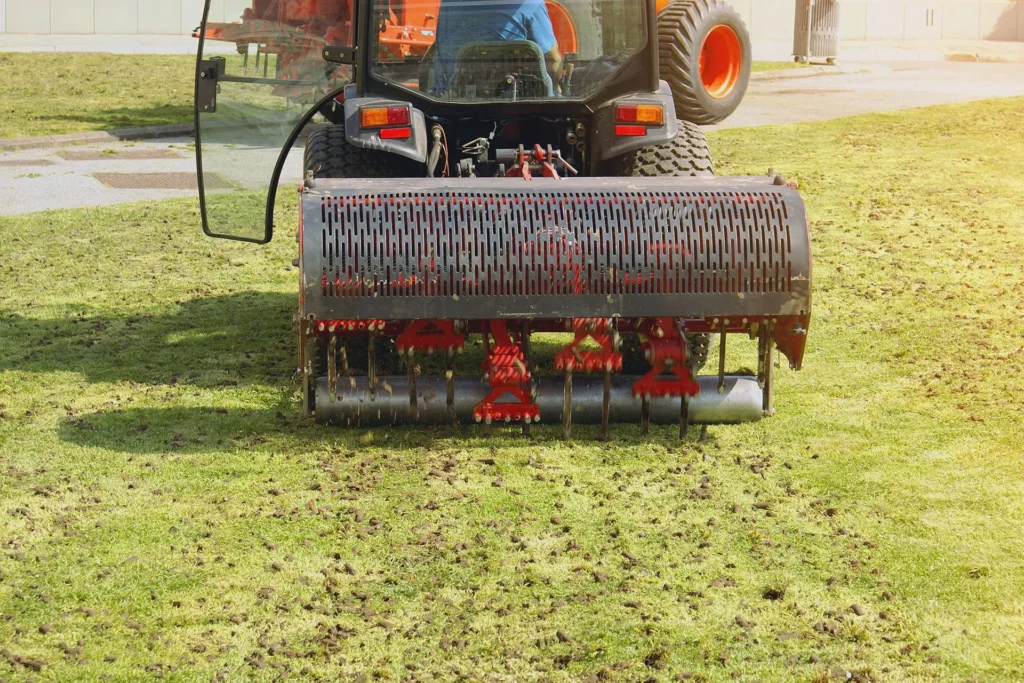
Lawn aeration is the process of mechanically removing soil plugs from your lawn to relieve compaction and improve soil structure. Over time, foot traffic, heavy rain, and natural settling compress soil particles, limiting the movement of air, water, and nutrients to the grass roots. Core aeration uses a mechanical aerator to extract small cores of soil approximately 2-3 inches deep and 0.5-0.75 inches in diameter, leaving channels that allow oxygen to reach the root zone.
When soil becomes compacted—typically with a density over 1.4 grams per cubic centimeter—grass struggles to establish roots deeper than 2-3 inches. Aeration reverses these problems by loosening dense soil and creating space for roots to expand 4-6 inches or more, which is what your lawn needs for long-term health and drought resistance.
How to Recognize If Your Lawn Needs Aeration
Several signs indicate that your lawn could benefit from core aeration:
- Water pools on the surface or runs off instead of soaking in within 30 minutes
- Grass appears thin, patchy, or slow to recover after stress
- Soil feels hard and resistant when you walk on it
- Your lawn experiences heavy foot traffic or frequent use
- The thatch layer exceeds 0.5 inches in depth
The screwdriver test provides a quick assessment. Push a standard screwdriver into your soil after watering. In healthy, non-compacted soil, the screwdriver should slide in easily to a depth of 6 inches. If it takes significant force or won’t penetrate more than 2 inches, your soil needs aeration. Contact us for a free evaluation if you’re unsure about your lawn’s condition.
When Is the Best Time to Aerate
In our service areas, timing depends on your grass type. For cool-season grasses like tall fescue, we recommend aeration in early fall (September to early October) when soil temperatures drop below 70°F and grass enters active growth. Warm-season grasses like bermudagrass and zoysiagrass respond best to aeration in late spring to early summer (May through June) when soil temperatures reach 65-70°F.
We avoid aerating during extreme heat above 90°F, drought conditions, or when the ground is frozen. Soil should be slightly moist—ideally 24-48 hours after watering or rainfall—for clean plug removal.
Our Professional Core Aeration Process
Our approach begins with a property evaluation where we assess soil type, compaction levels, drainage patterns, and turf health. We use commercial-grade aerators that apply 150-200 pounds per square inch of pressure, creating 20-40 holes per square foot with a proper 2-3-inch plug depth.
After aeration, the soil cores remain on the lawn surface where they naturally break down within 2-3 weeks, returning organic matter to your soil. This process works hand in hand with our fertilizer and weed control programs, allowing treatments to penetrate deeper into the root zone, where they’re most effective.
Why Professional Aeration Beats DIY
Rental aerators typically weigh 150-200 pounds and struggle to achieve proper plug depth in compacted clay soils common throughout Tennessee and Alabama. Our commercial equipment weighs 400-600 pounds and consistently pulls full-depth plugs even in severely compacted areas.
Our technicians also identify and mark irrigation lines, utility markers, and sensitive landscape features before aerating. We adjust our approach based on soil moisture, grass species, and your property’s specific conditions—drawing on decades of experience maintaining residential lawns and professional golf courses.
What to Expect After Aeration
You’ll notice small soil plugs scattered across your lawn immediately after service. These plugs break down naturally within 2-3 weeks through rain, watering, and mowing. Water infiltration improves within the first week. Root growth accelerates over the following 4-6 weeks, with most lawns showing visible improvement in density and color within 30-45 days.
FAQs
Can Aeration Help Control Weeds?
Aeration doesn’t directly kill weeds, but it promotes denser turf that naturally crowds out weeds. Healthy grass with deep root systems competes more effectively for space and nutrients. For comprehensive weed management in Huntsville, Auburn, and Memphis, combine aeration with our fertilizer and weed-control programs.
How Often Should I Aerate My Lawn?
Most lawns benefit from annual aeration. Properties with heavy clay soil, high traffic, or severe compaction may need aeration twice per year—once in spring and once in fall. Contact us for a personalized evaluation based on your specific conditions.
What Is the Difference Between Aeration and Aerification?
The terms describe the same process of removing soil plugs to improve air and water movement. “Core aeration” and “core aerification” both refer to mechanical removal of soil plugs rather than simply punching holes, which is called “spike aeration” and provides minimal benefit.
Aerification
Aerification is the mechanical process of poking holes in the ground and removing plugs of turf and thatch. This reduces soil compaction and allows oxygen and water to penetrate to the roots of the plant, creating a deeper root system to withstand harsh conditions. Healthy soil equals healthy plants.
Overseeding
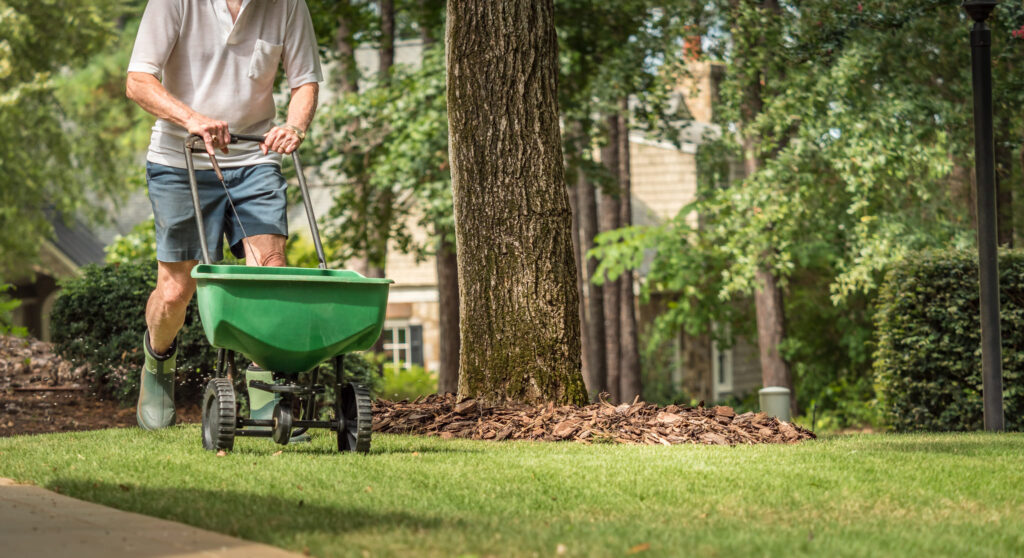
Cool season grasses such as fescue and bluegrass can do very well most of the year, but most summers we experience times of extreme heat and drought causing these types of grasses to become thin and weak. Seeding with new varieties of these grasses in the fall helps to bring back the thick, lush lawn everyone enjoys